Intellectuals
Loving God with the Mind
Description
“Intellectuals…are likely to be studying…doctrines like Calvinism, infant baptism, ordination of women, and predestination. These Christians live in the world of concepts. When intellectuals’ minds are awakened, when they understand something new about God or His ways with His children, then their adoration is unleashed. They may feel closest to God when they first understand something new about Him.”
(20, from Sacred Pathways by Gary Thomas)
Suggested Activities
- •Study the basic disciplines of theological training
- •Invest in biblical study: reading through Scripture; meticulous study of portions of Scripture
- •Read books that help understand what Scripture says — books on theology; books on church history
- •Do a year-long in-depth study of one topic
- •Listen to theology lectures or podcasts while driving
- •Study the seven basic topics in systematic theology: God, humankind, Jesus, the Holy Spirit, the Church, eschatology, and revelation
- •Study Christian ethics
- •Gain understanding of both internal and external apologetics
- •Study the creeds

Scriptures to Reflect On
Matthew 22:34–40
34Hearing that Jesus had silenced the Sadducees, the Pharisees got together.
35One of them, an expert in the law, tested him with this question:
36"Teacher, which is the greatest commandment in the Law?"
37Jesus replied: "'Love the Lord your God with all your heart and with all your soul and with all your mind.'"
38This is the first and greatest commandment.
39And the second is like it: 'Love your neighbor as yourself.'
40All the Law and the Prophets hang on these two commandments.
NIV — New International Version
Study Questions
What three faculties does Jesus name as ways to love God?
- –Heart, soul, and mind (v. 37)
What does it mean that this is the 'first and greatest' commandment?
- –It takes priority above all other commandments (v. 38)
- –All other commands flow from this foundational love
How does Jesus connect love of God with love of neighbor?
- –The second command is 'like' the first, they are inseparably linked (v. 39)
- –Head knowledge alone is never the final destination
What does it look like to love God 'with your mind'?
- –Studying Scripture and theology rigorously
- –Seeking to understand God's nature, purposes, and ways
- –Bringing our full intellectual capacity into worship and obedience
Takeaway: The greatest commandment includes the mind explicitly. For the intellectual, loving God with the mind is a calling — not a temptation. The goal of all study is deeper love: for God and for neighbor. Knowledge for its own sake falls short; knowledge that fuels adoration and service fulfills the commandment.
Reflection Questions
- 1.How thankful are you for your intellectual capacity? How do you express this and to whom?
- 2.In what ways have you applied your intellectual understanding of the Gospel to the service of others? In what other ways could you do so?
- 3.What are some of the most exciting discoveries you have made about God recently? How have they influenced your worship?
- 4.What most annoys you about other styles of worship? Ask God for His perspective on this. What does He say to you?
- 5.How do you react to the statement, "Worship is God revealing Himself to you, not you discovering God"?
Well Known Intellectuals

C. S. Lewis
British author & Christian apologist

J. R. R. Tolkien
English author & Catholic intellectual
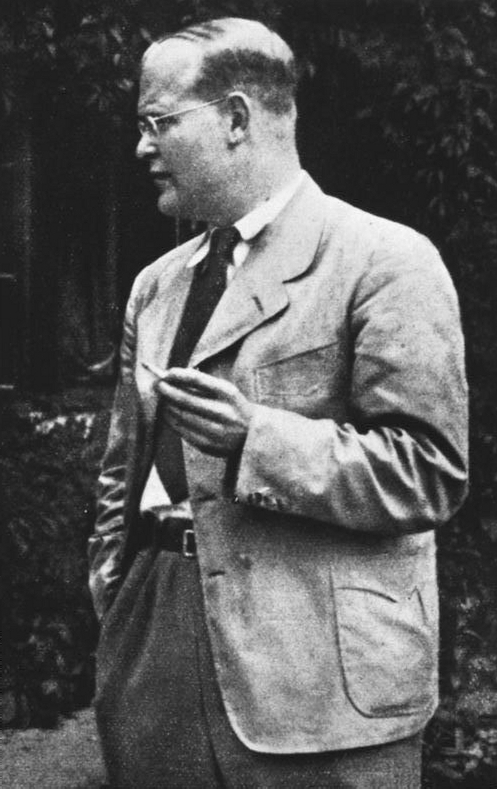
Dietrich Bonhoeffer
German theologian & martyr

Dorothy L. Sayers
English author & Christian apologist

John Calvin
French-Swiss theologian & reformer

J. I. Packer
British theologian & author
Resources
- Clouse, Robert, Richard V. Pierard, and Edwin M. Yamauchi (1993). Two Kingdoms: The Church and Culture Through the Ages. Chicago: Moody Press.
- Latourette, Kenneth Scott (1975). History of Christianity. San Francisco: Harper.
- Lewis, C. S. Mere Christianity. (1978). MacMillan Publishing Company.
- McDowell, Josh. Evidence that Demands a Verdict.
- Packer, J. I. Knowing and Doing the Will of God.
Sources