Traditionalists
Loving God through Ritual and Symbol
Description
Traditionalists are fed by what are often termed the historic dimensions of faith: rituals, symbols, sacraments, and sacrifice. These Christians tend to have a disciplined life of faith. Some may be seen by others as legalists, defining their faith largely by matters of conduct. Frequently they enjoy regular attendance at church services, tithing, keeping the Sabbath, and so on.
“Traditionalists are fed by what are often termed the historic dimensions of faith: rituals, symbols, sacraments, and sacrifice. These Christians tend to have a disciplined life of faith. Some may be seen by others as legalists, defining their faith largely by matters of conduct….Traditionalists have a need for ritual and structure.”
(24, from Sacred Pathways by Gary Thomas)
Suggested Activities
- •Contemplate the three elements of the traditionalist pathway: ritual, symbol, sacrifice.
- •Read Scripture aloud.
- •Select a Psalm to say every morning and one for each evening; practice liturgical prayer (see Book of Common Prayer).
- •Set a regular time and place to meet with the Lord each day.
- •Follow the Church calendar and celebrate significant days, e.g. Pentecost, Advent.
- •Develop meaningful rituals; make plentiful use of symbols or ritualized gestures.
- •Find areas of sacrifice.

Scriptures to Reflect On
Exodus 12:1–28
1The LORD said to Moses and Aaron in Egypt,
2“This month is to be for you the first month, the first month of your year.
3Tell the whole community of Israel that on the tenth day of this month each man is to take a lamb for his family, one for each household.
4If any household is too small for a whole lamb, they must share one with their nearest neighbor, having taken into account the number of people there are. You are to determine the amount of lamb needed in accordance with what each person will eat.
5The animals you choose must be year-old males without defect, and you may take them from the sheep or the goats.
6Take care of them until the fourteenth day of the month, when all the members of the community of Israel must slaughter them at twilight.
7Then they are to take some of the blood and put it on the sides and tops of the doorframes of the houses where they eat the lambs.
8That same night they are to eat the meat roasted over fire, along with bitter herbs, and bread made without yeast.
9Do not eat the meat raw or boiled in water, but roast it over fire—with the head, legs and internal organs.
10Do not leave any of it till morning; if some is left till morning, you must burn it.
11This is how you are to eat it: with your cloak tucked into your belt, your sandals on your feet and your staff in your hand. Eat it in haste; it is the LORD’s Passover.
12“On that same night I will pass through Egypt and strike down every firstborn of both people and animals, and I will bring judgment on all the gods of Egypt. I am the LORD.
13The blood will be a sign for you on the houses where you are, and when I see the blood, I will pass over you. No destructive plague will touch you when I strike Egypt.
14“This is a day you are to commemorate; for the generations to come you shall celebrate it as a festival to the LORD—a lasting ordinance.
15For seven days you are to eat bread made without yeast. On the first day remove the yeast from your houses, for whoever eats anything with yeast in it from the first day through the seventh must be cut off from Israel.
16On the first day hold a sacred assembly, and another one on the seventh day. Do no work at all on these days, except to prepare food for everyone to eat; that is all you may do.
17“Celebrate the Festival of Unleavened Bread, because it was on this very day that I brought your divisions out of Egypt. Celebrate this day as a lasting ordinance for the generations to come.
18In the first month you are to eat bread made without yeast, from the evening of the fourteenth day until the evening of the twenty-first day.
19For seven days no yeast is to be found in your houses. And anyone, whether foreigner or native-born, who eats anything with yeast in it must be cut off from the community of Israel.
20Eat nothing made with yeast. Wherever you live, you must eat unleavened bread.”
21Then Moses summoned all the elders of Israel and said to them, “Go at once and select the animals for your families and slaughter the Passover lamb.
22Take a bunch of hyssop, dip it into the blood in the basin and put some of the blood on the top and on both sides of the doorframe. None of you shall go out of the door of your house until morning.
23When the LORD goes through the land to strike down the Egyptians, he will see the blood on the top and sides of the doorframe and will pass over that doorway, and he will not permit the destroyer to enter your houses and strike you down.
24“Obey these instructions as a lasting ordinance for you and your descendants.
25When you enter the land that the LORD will give you as he promised, observe this ceremony.
26And when your children ask you, ‘What does this ceremony mean to you?’
27then tell them, ‘It is the Passover sacrifice to the LORD, who passed over the houses of the Israelites in Egypt and spared our homes when he struck down the Egyptians.’” Then the people bowed down and worshiped.
28The Israelites did just what the LORD commanded Moses and Aaron.
NIV — New International Version
Study Questions
What symbols are present in the Passover meal?
- –Lamb, blood on the doorpost, unleavened bread, bitter herbs
Why does God tell the Israelites to repeat this ritual every year?
- –Remembering God’s deliverance from slavery
Why do you think God used rituals and symbols to help people remember His actions?
- –Shared community, faith through repetition, make spiritual truths visible
How does the Passover lamb connect to Jesus’ sacrifice?
- –Point 1
- –Point 2
Study question 1 placeholder?
- –Lamb without defect, Lamb’s blood brings salvation, deliverance
- –Read the Last Supper (Luke 22:7-20)
Takeaway: Traditions help us remember and celebrate what God has done and who he is.
Reflection Questions
- 1.What rituals, symbols, etc. would you like to incorporate into your life? How do you think they would affect your personal worship time? What would you like them to do for you?
- 2.What rituals are necessary for you to be able to worship easily?
- 3.What happens to your ability to worship when you are fellowshipping in a church of a denomination that has little formal liturgy?
Well Known Traditionalists

Kathleen Norris
Poet & spiritual memoirist

Walt Wangerin
Author & Lutheran pastor

Clement of Alexandria
Early church father (c. 150–215)
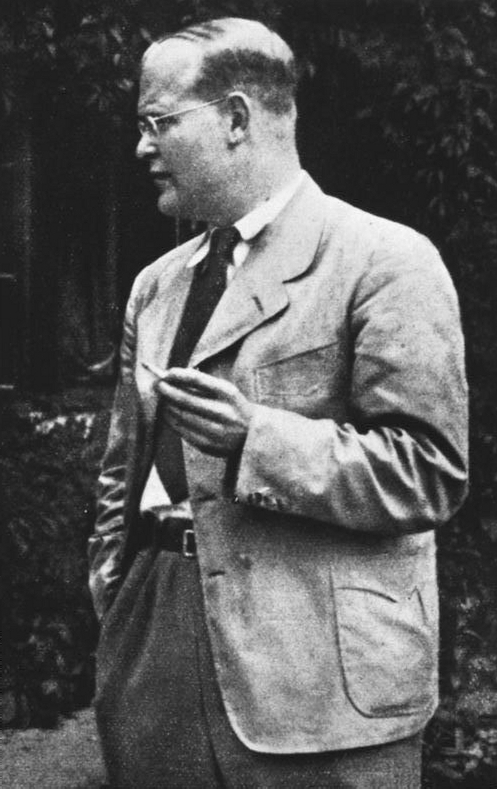
Dietrich Bonhoeffer
Theologian & martyr (1906–1945)
Resources
- Bethge, Eberhard (1972). Letters and Papers from Prison. New York: MacMillan.
- Heath, Sidney (1909). The Romance of Symbolism. London: Francis Griffiths.
- Jungmann, Joseph (1978). Prayer Through the Centuries, trans. by John Coyne. New York: Paulist.
- Nelson, Gertrude Mueller (1986). To Dance with God: Family Ritual and Community Celebration. New York: Paulist.
- Norris, Kathleen. Amazing Grace; Cloister Walk.
- Underhill, Evelyn (1936). Worship. New York: Harper and Row.
- Wangerin, Walter (1992). Reliving the Passion. Grand Rapids: Zondervan.
- Book of Common Prayer.
Sources